


In the context of the country entering a new stage of development with the need for breakthroughs in science, technology and innovation, Resolution No. 57 of the Politburo has set a goal by 2030: “Human resources for scientific research, technology development, and innovation reach 12 people per ten thousand people”. This is not only a quantitative indicator, but also a strategic orientation to improve national competitiveness, promote knowledge-based economic development and comprehensive digital transformation.
In the early spring atmosphere of 2026, the reporter had an interview with Dr. Tran Ai Cam – President of Intracom University about the role, responsibilities and specific solutions of the University in participating in building and developing a human resources team for scientific research, technology development and innovation in the spirit of Resolution 57.

PhD. Tran Ai Cam – President of Intracom University shared about the role, responsibilities and specific solutions of the school in participating in building and developing a human resources team for scientific research, technology development and innovation.
Reporter: Dear Doctor, with Resolution 57 setting a target by 2030: “Human resources for scientific research, technology development, and innovation reach 12 people per ten thousand people”, How does a higher education institution define its specific roles and responsibilities?
This is an important goal, not just a simple number, but it also shapes the capacity requirements of human resources in the country’s era of advancement. In fact, educators have determined that “without people with the ability to innovate, there is no innovation“Therefore, the revised Law on Higher Education in 2025 also stipulates the goal of “university level training to equip learners with a foundation of knowledge, professional skills, and basic competencies in research, innovation, entrepreneurship, and professional practice“The new context requires higher education institutions to innovate comprehensively, from functional orientation, governance model, culture, team capacity and output results. In fact, those requirements have also been pointed out in the Resolution on “strongly promote the development of higher education institutions following the model of innovation universities and new generation technology universities, becoming the driving force and core in the innovation ecosystem of the regions; Support the effective implementation of State – School – Enterprise cooperation. There is an effective support mechanism for lecturers and learners to implement start-up projects, innovate, establish seed companies, and start-up companies. Accordingly, higher education institutions need to have the following basic transformations:
Firstly, this is the transition from traditional research and applied university models to an innovative university model, in which higher education institutions not only perform two core functions of training and research, but also expand and integrate innovation functions. Through activities such as technology transfer, commercialization of research results and support for startups, universities serve the community and contribute to increasing socio-economic value for the country.
Monday, outputs of training activities are expanded from being mainly linked to the rate of students having jobs after graduation to including the rate of students starting businesses. Accordingly, higher education not only trains highly qualified human resources and scientists, but also aims to form a team of technologists, innovators and entrepreneurs.
Tuesday, research activities are transformed from being mainly oriented on scientific publications to research associated with intellectual property, capable of developing into innovation projects, startups, as well as forming spin-offs and start-up companies.
Wednesday, the university “ivory tower” model is transformed into an innovative university ecosystem, in which the university plays the role of the nucleus linking the three houses. Accordingly, the university coordinates with the state in carrying out scientific and technological tasks as ordered; At the same time, closely connect with businesses in applied research, technology transfer and commercialization of research results, thereby creating a working environment and sustainable career development for the research team.”
Reporter: How are the school’s training programs, teaching methods, and startup playground innovated so that students and postgraduate students are oriented to become a force participating in research, technology development, and innovation?
Following the above approach, many universities around the world have begun to convert traditional Bachelor of Science training programs into innovation-oriented bachelor training programs in traditional occupations (for example, from Bachelor of Science in Physics to Bachelor of Innovation in Physics. For Vietnamese higher education institutions, naming degrees may not be an immediate priority; however However, the content of the training program needs a fundamental change. Accordingly, in addition to the core knowledge of the industry and industry groups, it is necessary to add modules on knowledge and skills for entrepreneurship and innovation, in which interdisciplinary, flexibility and openness are especially emphasized. Regarding teaching – learning methods, universities need to shift from one-way knowledge transfer methods to active teaching – learning models such as research-based learning, project-based learning and learning through learning. Solve practical problems. Basically, teaching and learning methods should be approached according to design thinking, because innovation is the process of integrating liberal education and design thinking. In addition, developing innovative research and entrepreneurship “playgrounds”.
In addition to formal training, schools need to build a support ecosystem including: open laboratories, innovation centers, startup incubators, creative idea competitions, research support funds for students and postgraduate students. These playgrounds help learners test ideas, connect with lecturers, scientists, businesses and investors, and gradually turn research results into products, technology or startup models.
In short, through innovating training programs, teaching methods and developing research and entrepreneurship playgrounds, the school not only trains knowledgeable learners, but also orients, guides and creates an environment for them to become a force for research, technology development and innovation, directly contributing to the country’s science and technology development goals.
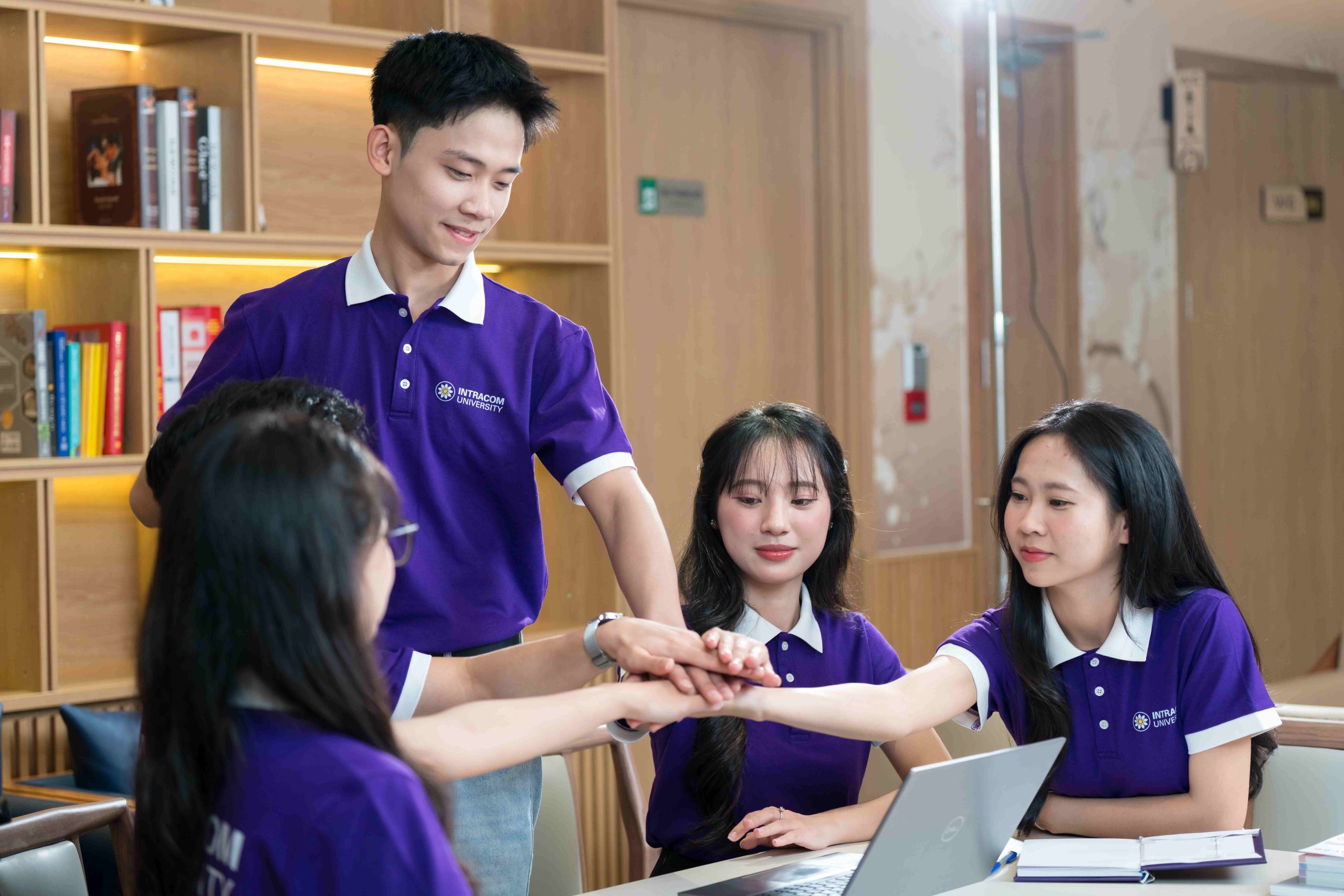
Students studying at Intracom University can study in a modern technology environment, inspiring creativity and innovative thinking
Reporter: In scientific research, what specific models and mechanisms have the school been implementing (research groups, laboratories, research-transfer centers…) to attract, nurture and develop a team of lecturers and young scientists to directly participate in developing human resources for scientific research, technology development, and innovation?
Intracom University is located in the Intracom ecosystem, with the fields of energy, environment, health, agriculture, so the University develops training – research – innovation closely with the Intracom business ecosystem, which is determined to be a vital strategic direction.
Scientific research and innovation are two main pillars of the University’s development strategy.
Creating knowledge and solutions for real impact is a thorough orientation in the school’s scientific research development, aiming to create knowledge, data and solutions with high application value, directly serving businesses, localities and society, while gradually improving the school’s academic capacity and research position. Oriented research for impact, research activities are organized at Massive – Co-op – Elite levels, combining foundation research, collaborative research and cutting-edge research; Promote ordering projects from businesses and models living lab and interdisciplinary cooperation. On that basis, the School focuses on forming research groups, applied research centers and centers of excellence, along with building a research data management platform, digital knowledge warehouse and analysis support tools. All research activities are closely linked with training and innovation, ensuring that the knowledge created not only has academic value but also creates a real impact on socio-economic development.
Transforming knowledge into socio-economic valuei is a central orientation in the school’s innovation pillar, to strongly promote knowledge transfer activities, commercialize research results and form an innovative startup ecosystem, creating real and sustainable socio-economic values. Accordingly, the school focuses on developing innovation spaces, incubators and startup support centers; closely linking training – research – innovation through cooperative projects with businesses; support lecturers, students and scientists to form startups, spin-offs and commercially viable products; At the same time, build a transparent and effective intellectual property mechanism, share benefits and encourage creativity. On that foundation, the school proactively expands cooperation with businesses, investment funds and international partners, gradually bringing knowledge from lecture halls and laboratories to life, making practical contributions to socio-economic development.”
Reporter: With positive assessments of Resolution No. 57, do you have any suggestions or “plans” for us to achieve the set goals?
To achieve the goals of Resolution 57, we need a comprehensive, consistent and persistent approach, in which people – especially young scientists and research forces – must be placed in a central position, while institutions, resources and innovation ecosystems play a constructive and supportive role. This is the key to turning the spirit of Resolution 57 into practical results.
Solutions have also been proposed by many experts and scientists. The government is also making changes from institutions to implementation, in the following aspects:
Firstly, Strongly shift from the mindset of “spread investment” to focused investment.
It is necessary to clearly select national and regional priority areas, associated with socio-economic development needs and comparative advantages, thereby focusing resources on strong research groups, centers of excellence and key training and research programs, avoiding dispersion and fragmentation.
Monday, considers universities as the central pillar in developing scientific and technological human resources.
The State needs to boldly place orders for key higher education institutions in training, research and innovation; At the same time, it grants substantive autonomy associated with accountability, creating conditions for universities to promote their core role in the science and technology ecosystem.
Tuesday, create a strong enough mechanism to attract, retain and develop scientists.
In addition to remuneration, it is necessary to build a healthy, transparent academic working environment, with a clear career development roadmap, linking evaluation, appointment, and income with research efficiency and social impact, especially focusing on the team of young scientists.
Wednesday, promoting substantive links between the state – schools – businesses.
It is necessary to design research programs, funds and tasks according to the co-sponsorship and co-implementation model, in which businesses participate right from the problem identification stage, and the state plays the role of policy sponsor and risk sharer, thereby improving the ability to apply and commercialize research results.
Thursday, building a modern data infrastructure and governance mechanism for science and technology.
Developing open data platforms, transparent evaluation systems, standardizing research management processes, reducing administrative procedures, creating conditions for scientists to focus on creativity and solving the country’s major problems.”
Reporter: What strategies does the school have to attract domestic and foreign experts and scientists to participate in research, technology development and innovation programs?
We determine that attracting and retaining scientists is not just a matter of compensation, but of building an academic environment sufficient for them to maximize their creative capacity and create real impact. Therefore, the School’s strategy is implemented in many layers of synchronous solutions.
First of all, Intracom University focuses on building strong research groups and cutting-edge interdisciplinary research directions, linked to the practical needs of business and society. When scientists see a “big problem”, have resources to implement it, and have the opportunity to transform research results into specific products, they will be motivated to participate and stick around for a long time.
In addition, the School develops flexible cooperation mechanisms such as visiting professors, collaborating scientists, co-chairs of topics, and co-instructors of graduate students, creating conditions for domestic and foreign experts to participate without rigid administrative constraints. We also gradually build a research fund, a mechanism to share benefits from commercializing research results, and ensure transparent and fair intellectual property rights.
More importantly, Intracom University aims to form an open academic environment, respecting academic freedom, promoting scientific standards and research efficiency. Investing in data infrastructure, digital research platforms, modern workspaces and international connections is also the foundation to attract reputable scientists. We want the school to be more than just a place to work, but a place where professionals find meaning, opportunities for collaboration and a sustainable creative space.
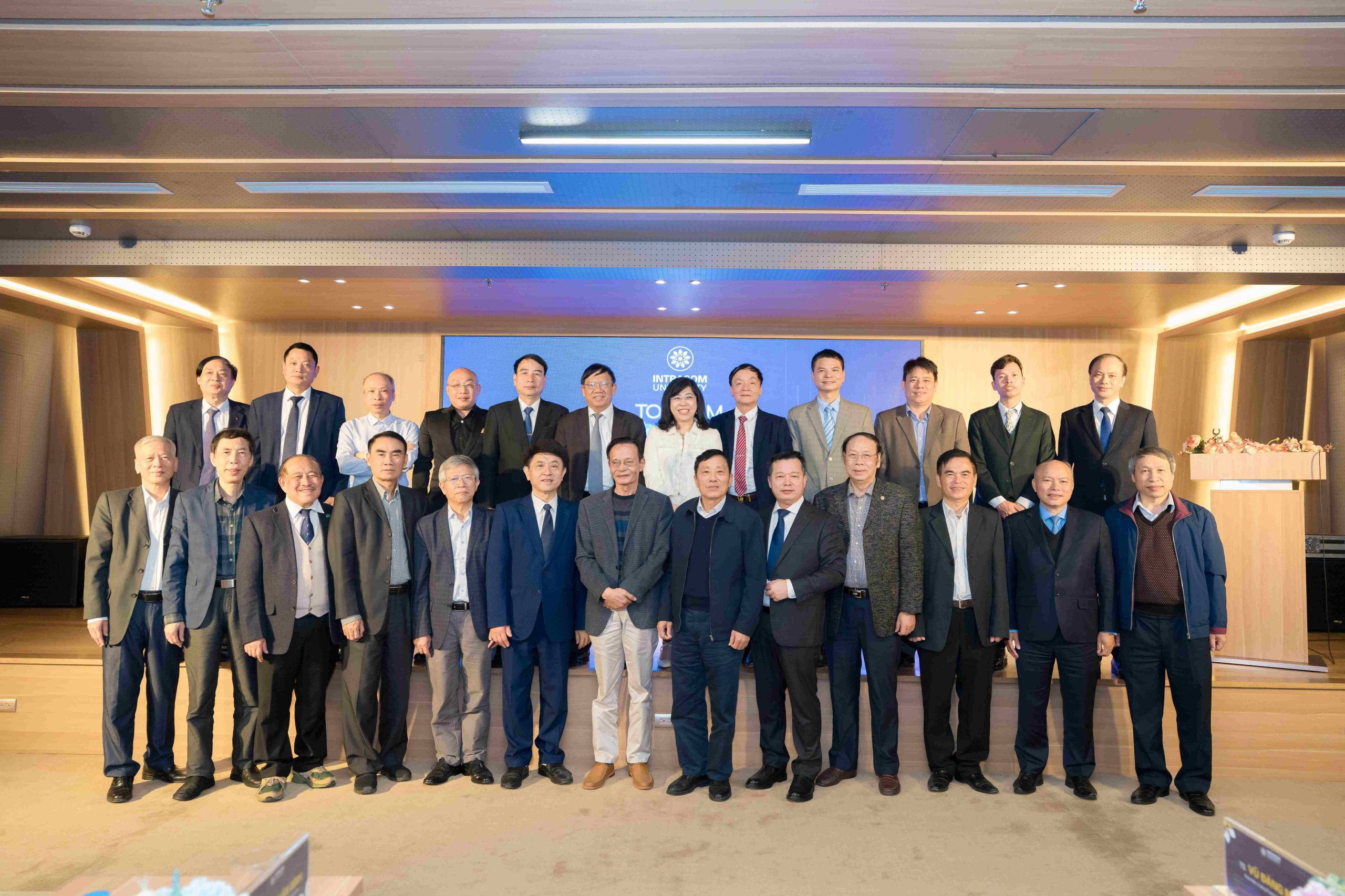
Intracom University brings together a team of domestic and foreign experts and scientists to promote research and technology application
Reporter: With the advantage of belonging to the Intracom ecosystem, the School will exploit the model “university in business – business in university” How to create living laboratories and realistic technology testing environments?
Intracom University’s biggest advantage is that it is located in a business ecosystem operating in many fields such as energy, environment, health and agriculture. This allows us to deploy the model “university in business – business in university” in a real way, not just on paper cooperation.
“University in business” means that lecturers, students and researchers are directly involved in real business projects, from problem identification, solution design to implementation and effective evaluation. Factories, farms, hospitals, energy projects… become living laboratories, where research ideas are tested in real operating conditions, with real data and real technical requirements.
On the contrary, “university enterprise” reflected in the enterprise’s deep participation in the training and research process. Business experts co-design programs, co-guide projects, order research topics, invest in laboratories and share benefits from application results. This helps shorten the gap between research and the market, while creating a practical working environment for students right from the time they are still in the classroom.
Adopts the model “living” laboratory, the school aims to form a closed technology testing ecosystem: from ideas, research, testing, optimization, commercialization. This is not only an experiential learning environment, but also a launching pad for technology products, startups and highly applicable innovative solutions. We believe that, when universities and businesses work together on a common value chain, science and technology will truly become a driving force for sustainable development for both schools and society.
Thank you for sharing Dr. Tran Ai Cam. We hope that under her leadership, Intracom University will grow stronger, making practical contributions to the country’s science – technology and innovation journey.
On December 12, 2023, the Party Committee of Chu Van An University solemnly organized the Party Admission Ceremony for 03 outstanding people who are officers and employees under Party Cell 1, including comrades: Hoang Nang Nam, Nguyen Thi Thanh Mai and Nguyen Bich Phuong.

Distance University is a form of online university training, allowing learners to access the curriculum without having to go to class in the traditional model. Instead of studying directly in the lecture hall, Intracom University students will study online through the University’s training platform system.

October 11, 2025, Workshop “Give wings to your dreams – Study abroad in China in 2026” organized by QTEDU coordinate with Intracom University (Formerly Chu Van An University) the organization took place successfully in a solemn and vibrant atmosphere in Hanoi.

In the journey of choosing the future, having access to accurate admission information and clear career orientation plays an extremely important role for senior students. In order to accompany students in this key stage, the Working Group of the Admissions and Student Affairs Department in collaboration with the Training and Voc…
In the training orientation associated with practice, Intracom University Continuously organize experiential activities to help students expand their knowledge, nurture civic thinking and a sense of social responsibility. One of those meaningful activities is the tour Vietnam National Assembly Building and Presidential Palace re…

On October 27, 2023, Center for Professional Training and Practice – Intracom University attended and spoke at the Scientific Conference “Promoting connection, dissemination and sustainability in Legal Practice Education in Vietnam” organized by National Economics University in collaboration with Foreign Trade University and BAP…
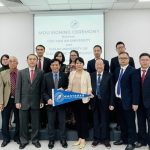
Guilin University of Electronic Technology (GUET) Established in 1960, GUET is a key public university in Guangxi (China). This is a multidisciplinary university, with outstanding strengths focusing on the fields of engineering, information technology and electronic technology, while expanding training to many fields of applied…